Tuesday, November 20, 2012

What's bugging your gut, part 3: Entamoeba histolytica


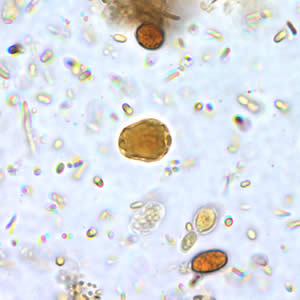
File:Entamoeba histolytica 01.jpgConsidered pathogenic, this amoeba is a single-celled organism that constantly changes shape. It is pathogenic and can infect the intestines as well as other organs (via the blood-stream) such as the liver.

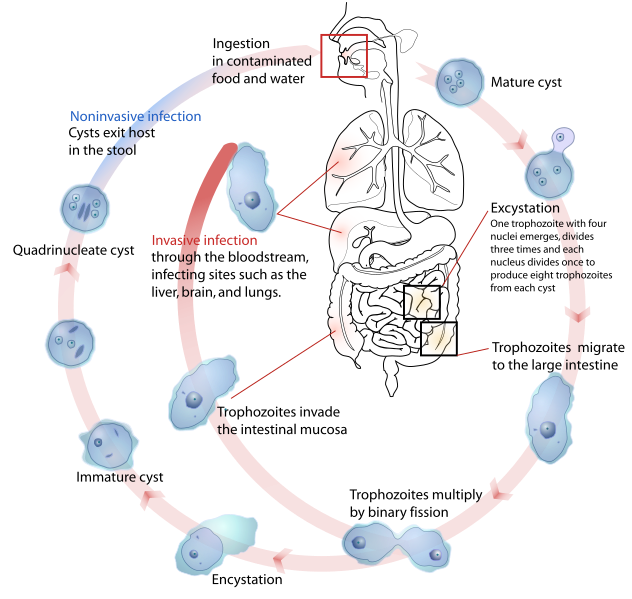
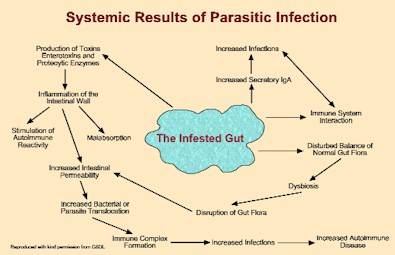
Transmission of this bug is usually through faecally-contaminated food, water, or hands, as the cysts are passed in faeces and can survive in the environment outisde of the host for anywhere from days to months. Once the cyst is ingested, the trophozoite is released into the intestinal tract where it can bore into the intestinal lining and cause symptoms, even going further and ending up in the blood-stream, where it will be deposited into other organs, such as the liver, lungs, brain, spleen, etc. It is found using a stool test.


File:Entamoeba histolytica life cycle-en.svgSymptoms include a gradual onset of abdominal pain, diarrhoea, weight loss, fatigue, and bloody stools. In severe cases, fever and dysentery can be found. When deposited into the liver, it causes amoebic liver abscess, which can be fatal if left untreated. it is not uncommon for Inflammatory Bowel Disease (IBD) to be diagnosed when actually, this little bug is the poblem.


Like other intestinal parasites, this amoeba can be treated using pharmaceutical anitbiotics, however herbal medicine can also be beneficial, used in the appropriate dosages and in the appropriate manner. The standard protocol of clearing the gut and boosting the immune system using medicinals such as Chinese wormwood, Black walknut, cloves and turmeric. The gut then needs to be re-built using pre- and pro-biotics.

To make abooking to have your digestive system brought back into harmony, call Discover Chinese Medicine on 03 9013 1777, or click here to make an online booking.

Saturday, November 3, 2012

Get your Mo on for men's health!

It's that time of year again when men around town start sporting odd-looking facial hair, looking like someone out of a barbershop quartet or a bikie!

No, it's not a cyclical trend of course - it's Movember, where men grow moustaches in support of promoting men's health. The global, month-long charity which had its humble beginnings in Melbourne specifically raises money for research and awareness into prostate cancer and male mental health.

The statistics are quite frightening,  with rises in the diagnosis and treatment of depression (linked inextricably to incidences of suicide in seemingly-happy males). Male life expectancy is about 5-6 years less than women; The suicide rate in males is four times higher than women; and it is estimated that five men die prematurely each hour from potentially preventable illnesses.

The Movember movement has shown to be effective not just in raising awareness about andrological health in mens' minds, but also in making significant changes in their lifestyle - the most important being actually visiting a doctor and getting a health check! As I've written on this site before, men are often reluctant in going to see a doctor in order to get checked out, let alone if they are actually starting to feel sick. Prevention is far better than the cure, not just for the individual, but also is thought to significantly make a difference to the national budget on health and take the strain off an already struggling health system.

Chinese Medicine of course has as its fundamental axiom the principle of preventing disease before it happens. The idea of treating sickness was likened to trying to fill a well when the village is dying of thirst. With our unique diagnostic system, such as the observation of the pulse, the examination of the tongue, palpation of the channel system, and the interpretation of various signs and symptoms as part of a larger 'pattern', we are able to gain subtle insights into the state of an individual's health. Often, some of these signs reveal the beginnings of more serious conditions, signs that the average person wouldn't think twice about, or consider a sign of becoming something more serious.

These Signs include constant headaches, persistent lower back pain, dribbling after urination, decreased libido or sexual function, feelings of discontent, waking up tired, unable to fall asleep, bloating after meals, changes to regular bowel habits, putting on weight, constant irritability or short tempers, greying and loss of hair, inability to cope with stress, feeling overwhelmed, rib-side pain, acid reflux, indigestion, shoulder and neck tension, recurring colds and 'flus, and so on.

On their own, these things seem innocuous and harmless. But when there is a pattern of these symptoms occurring more than once or twice, they point to what Chinese Medicine practitioners refer to as a 'pattern of disharmony'. A presenting pattern may be nothing that causes a disruption to one's normal daily routine, but if left unaddressed it can progress on to other more serious and chronic conditions.

Being able to see these patterns and treat them is part of the preventative process. Treating these disorders gently and natural with Chinese herbal medicine and acupuncture means reversing the disharmony gently, and then building the body, mind, and emotions up to be strong. Strength in men is important, as it allows us to be authentic individuals, to bring out our natural protective tendencies and to hold the space effectively for our wives, sisters, daughters, and mothers.

So whilst your grow your Mo this Movember, don't forget to come into the clinic for some preventative acupuncture and Chinese herbs. Take control of your health, your body, mind, and spirit, and start your new life with good health and happiness.

Click here to make a booking with our practitioners at Discover Chinese Medicine.

Tuesday, October 16, 2012

What's bugging your gut, part 2: Dientamoeba fragilis


Dientamoeba fragilis is a single-cell parasite that infects our lower gastrointestinal tract. It is usually the cause of "Travellers' diarrhoea", chronic abdominal pain, chronic fatigue and failure to thrive in children.

It is known to spread via contaminated water and is connected with poor sanitation, however it is becoming more prevalent in industrialised countries in children. D.fragilis is also closely associated with pinworm, where it is thought that the trophozoite is found in the eggs of the pinworm.


The main symptoms one would experience if infected with this parasite are abdominal pain and diarrhoea (which can can come and go for about two weeks). In children, symptoms can be more severe. Other known symptoms include:
  • Weight loss
  • Fatigue
  • Nausea and vomiting
  • Fever
  • Urticaria (skin rash)
  • Pruritis (itchiness)
  • Biliary infection
Diagnosis involves three fixed stool samples, as it is not uncommon for a single test to show no infection, yet subsequent stool samples show increasing amounts of the parasite.

Because the symptoms of infection resemble those of IBS, many medical doctors will dismiss the notion of infection and some have been known to refuse to perform stool testing. In a 2002 Australian study, a large number of patients who were thought to have IBS actually were infected with D. fragilis.

Inflammation, hives, arthritis, low iron, leaky gut have all been associated in the scientific literature with D.fragilis or B.hominis.

It is known that restricting high carbohydrate foods (ie, grains) from our diet helps, as it this parasite - alongside B. hominis - thrive from the carbohydrate chains found in these foods.

Like B.hominis, the answer is to clear the gut of the parasite, using a similar herbal mix which pierces through the mucosal capsule surrounding the capsule and then flushing it out of the intestines. The gut then needs to be repaired using good quality pre- and pro-biotics. Even the herbal remedies for clearing this can cause problems if not prescribed in correct dosages, so it is best to consult a qualified, registered herbalist with experieince treating these and other types of intestinal parasites.

Wednesday, September 26, 2012

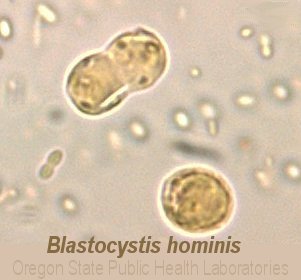
What's bugging your gut, Part 1: Blastocystis hominis


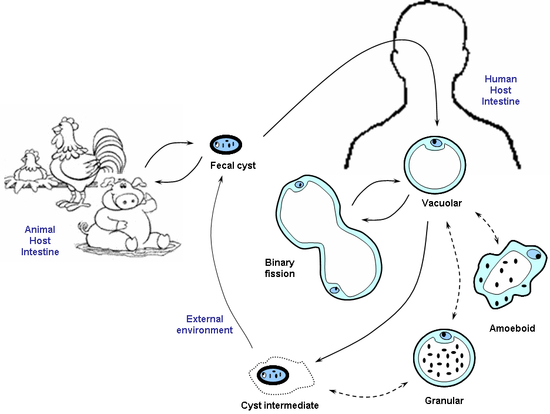
Blastocystis hominis is a small protozoal parasite that lives within the mucus of the large intestine and the colon, sticking to the inner wall, thus making it extremely difficult to get rid of even with extensive medication.

It is transmitted via the faecal-oral route, or from contaminated food or water. Incidence of B.hominis is therefore quite high in developing countries; however the incidence in developed countries is great amongst those with regular exposure to animals.

Part of the problem of this parasite is that many people may have them, but present with no symptoms whatsoever. For the most part, it is thought to not really be a problem in health unless someone later develops a problem with the immune system or the digestive system. The usual signs of infestation include anal itching, diarrhea, excessive flatulence, weight loss, on-and-off abdominal pain/cramps, abdominal distension, bloating and discomfort, constipation, diarrhea, nausea, intense brain fog, very low energy levels, lack of concentration, lack of appetite at times but increased cravings at other times and strangely enough weight gain. Those who suffer from allergies, immune system difficulties, skin problems, and bowel problem should also suspect that B.hominis may be causing problems.


The only true way to determine if the parasite exists in significant numbers in your gut is to get a digestive stool analysis which includes testing for parasites (not all stool testing is the same). These tests usually have a turnaround time of 1-2 weeks, depending on the pathology service.

Whilst mainstream medicine will prescribe strong anti-biotics, this is often found by some patients to be ineffective. There are natural medicine treatments that do work in reducing the severity of the parasite, with treatment protocols that can take 1-2 months.

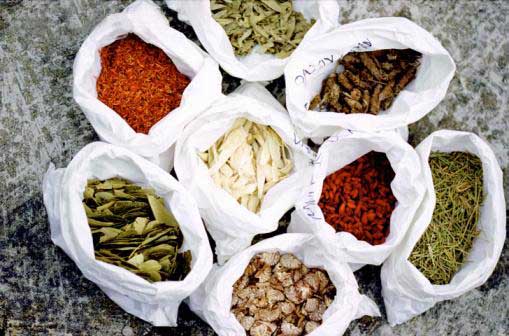
There are certain Chinese medicine herbs that research has shown to be useful in clearing the gut of these parasites - which, according to traditional Chinese Medicine diagnostic approaches, are also generally indicated for the types of patterns one expects to find with the above signs and symptoms:
  • Huang Lian (Coptidis rhizome)
  • Huang Bai (Phellodendron rhizome)
  • Huang Qin (Scutellaria rhizome)
  • Ya Dan Zi (Brucea seed)


These herbs are all noted to 'clear Damp-Heat & Toxicity', which many of the above signs correlate to, and lack the harsh side-effects that powerful anti-biotics usually have. Some other herbs that are used include Black Walnut and Wormwood, Oregano oil, Thyme oil, and Clove oil. These herbs all need to be prescribed in the correct dose to be truly effective.


Some other treatments known to be effective include:
  • Less/No-grain diet: B.hominis is known to thrive on the the carbohydrates from grains, as well as sugar.
  • Colonic irrigation/enema with herbs that are focussed on killing the parasite.
  • Highly effective fat-digesting enzymes - this parasite is known to be built with fats; the dissolution of fats weaken and kill it.
Once the parasite has been cleared out of the system, we have found that the gut needs repairing, and this is done using specialist probiotics. The course of treatment can be repeated a couple more times, with re-testing to confirm how much of the parasite has been cleared.

There may still be a need for other herbal formulas to treat other aspects of illness/disharmony, and this is where the power of Chinese herbal prescriptions comes into its own, further strengthening and healing the digestive system after B.hominis infestation, and the clearing treatment. Herbal medicine is prescribed for the person, attending to redressing any energic imbalance also.

Patients often remark how the usual milieu of digestive complaints disappear once this parasite is no longer in their digestive tract.


Wednesday, September 19, 2012

Hayfever is here - but it doesn't need to stay!

It's spring time again... and for those who suffer from hayfever, this time of year can be quite annoying, not to mention downright uncomfortable - stuffy noses, itchy, swollen eyes, sore sinuses, constant sneezing, and sometimes a head that feels like it's wrapped in cotton wool!

Of course, chronic sufferers of hayfever can experience this at any time of year, especially if this is an allergic reaction to allergens such as dust mites, fungal spores, animal dander, or fumes. However for those who react adversely to grasses and pollens, the explosion of plant growth at this time of year (coupled with increased winds) can make things particularly difficult for a short period of time.

Hayfever is essentially the triggering of a hyper-stimulated immune system response by the particular offending allergen, usually inhaled. Histamine is released by the cells bound to the antibodies, which then produces the sneezing, itching, and watery eyes. Hence why anti-histamine is normally prescribed to treat the symptoms. These drugs can be effective at first, but come with the side-effects of drowsiness, dizziness, nervousness, and upset stomachs. More importantly, because they don't address the root of the problems (they just suppress the action of histamine, the body's normal immune response to the present of the allergen), the body can develop a tolerance for the drug, thus essentially rendering them ineffective at controlling the symptoms of hayfever.

Chinese Medicine is very good for hayfever, in that practitioners seek to address the root of the problem - building and strnegthening the immune system - whilst also effectively treating the symptoms without any of the unwanted side-effects.

Acupuncture and herbs can have a very immediate effect on reducing the symptoms of hayfever. Acupuncture is best sought 2-3 times a week  for 1-2 weeks. However, if acupuncture is combined with the appropriate herbal medicine, treatment need only be weekly initially. Herbal medicine is particularly good, as it can be taken only when symptoms appear and stopped when they disappear. It is often handy to have these on hand at home, as long as they have been properly prescribed for you.

In chronic situations, the immediate acute attack is treated in the same way, attacking the symptomatic, immediate condition. However in between attacks (and often in-between 'hayfever seasons') is when a practitioner would seek to enahnce and strengthen your immune system and build up your constitution to enable you to withstand attack from the allergen. When chronic hayfever sufferers undergo this kind of treatment, not only does hayfever often become a thing of the past, but there are usually other health benefits, as the body is brought back into balance, possibly leading to better immunity from colds and 'flu's, more energy, and increased general wellbeing.

Of course, preventative measures can also be taken, and if the allergens are known to be things like dust, moulds, or fumes, then we can take steps to eliminate - or reduce as much as possible - the presence of these. If dust is a problem, for example, it would be a good idea to look at what measures can be taken in the home to minmise this: maybe replacing carpet with floorboards? What is the source of the dust? Is there a lot of loose soil outside the windows, or living on a dusty, unsealed road? Do you have pets? Is it their hair, or skin being left everywhere? If you have birds, how often do you clean the cage out? Are the animals left inside? These are the kinds of things to look at in the home (or workplace) to ensure you can minimise the effects of hayfever.

Wednesday, September 5, 2012

Men need to "feel" how they feel

Talk to any man about their health and you'll usually get "yep, all fine", or no response at all.
According to the Australia's Health Report 2010, on average men rate their health better than what it actually is, and see a medical or health practitioner less than women.

Probably because of this, women are targeted more in health promotion and marketing, because they are more likely to seek out the assistance of a doctor or health practitioner earlier if a problem arises, or certainly in terms of preventative medicine. Mens' Health is often forgotten.....

While men are just as susceptible to chronic illnesses such as diabetes, hypertension, high cholesterol levels, and overweight/obesity, they also have specific andrological illness to keep an eye out for, such as enlarged prostate (ether benign or malignant), problems with bladder control, and of course sexual-related issues such as low libido, premature ejaculation, and impotence.

The biggest and most insidious problem of course lies in mental health - depression, anxiety, etc
Men don't talk about their health, or consider illness to be a big deal, in the same way, they also don't talk about how they feel. This can often impact on their relationships with their loved ones, and partner. Often, this can be a significant contributing factor in sexual dysfunctions, and of the inability to please lover further compounds a sense of low self-esteem and self-worth.

Whilst men have to deal with their own individual issues - physiological as well as emotional - they also are continually bombarded by mixed messages in the media about what it means to be male: competitive, fit, well-groomed, tall, muscular (the 'six-pack abdomen'), successful, dominant, and outgoing. These images are supported by celebrities who fit these images; all too often however, these 'role models' turn out to be less than perfect, getting in trouble with the law, treating women poorly, being involved in brutish and loutish behaviour, drunkenness and drug addictions. These archetypes seem to lack a core masculinity, and when men feel they are not meeting those expectations, this can also lead to very uniquely-male reactions to ideas around self-worth.


In Chinese Medicine, the inability to discuss how one feels is intimately linked with other more serious organic pathologies. This is called yu: constraint or stagnation. When Qi does not flow through the channel system properly, it is unable to reach other parts of the body. This can lead to issues with digestion such as abdominal bloating, heartburn or reflux; or even to sexual dysfunctions, such as low libido, impotence, or premature ejaculation. Prostatitis is often the result of this stagnation, especially in the channels associated with the genitals, after many years of this lack of free-flow. Constraint of this sort is also intimately linked with poor mental health, manifesting as depression, low mood, and even disorders such as anxiety or panic attacks; the latter also being linked with serious heart disease and hypertension.

Acupuncture is particularly useful at promoting that free-flow of Qi throughout the body, ensuring that all the vital substances are able to reach the various parts of the body that they are required. Many men notice how they "feel" better after an acupuncture treatment, even if they are coming for something 'physical'. Once Qi flows better, men are able to 'feel' how they feel, and are more likely to be able to embody the type of honourable man they know they should be.

Herbal medicine is of course beneficial at rebalancing the internal landscape of the body, correcting imbalances amongst substances (such as hormones, fluids, blood, etc.) and providing the material basis for such energetic/emotional shifts. This can be accentuated by following an appropriate diet, and exercising appropriately. Yoga, Qigong, Taichi, Pilates, walking, etc are all useful ways of keeping the body fit, the mind sharp, and the emotions flowing.

Men need to be encouraged to fully perceive how they feel about themselves, and seek help earlier. Most serious chronic illnesses can be prevented if addressed early enough. It is perfectly 'manly' to seek help, and accept that sometimes we are vulnerable - this is part of being a mature and capable male.


Monday, August 6, 2012

Infants & Eczema

Eczema is a non-infectious inflammatory skin disorder which is relatively common in Australia, thought to be found in 1 in 3 Australians. It is often diagnosed as dermatitis as the signs and symptoms are thought to be similar. The most common form found is atopic eczema, where the skin becomes red, dry, itchy and scaly and causes much discomfort for the sufferer; it can also present as weeping, although this presents more in sub-acute and chronic cases. Eczema usually begins in childhood, somewhere between 2-6 months, and most children grow out of it by the age of six, thus being quite prolific amongst children, with an estimated 1 in 5 children having atopic eczema by the time they start pre-school.

It's bad enough to suffer from this as an adult, but it can also be quite nasty for an infant, as they have no way of uderstanding the discomfort, or even able to communicate that discomfort - thus putting a lot of stress and anxiety on parents as they struggle to comfort their baby. Infants and toddlers usually show therash on their face, elbows, and knees, but is not necessarily confined to there, depending on the severity. The complication for seriousc ases is that the lesions can become infected.

Eczema is linked with a family history of asthma, hayfever, or eczema, and with reactions to certain foods such as dairy, wheat, citrus, eggs, nuts, and seafoods. However irritants such as chemicals and tobacco-smoke, allergens such as house-dust mites, moulds, pollen, and soaps can also cause flare-ups. Even the weather, or air-conditioning can irritate the skin into developing the eczema rash.

If there is a family history of asthma or eczema, mums-to-be are strongly advised to breast-feed babies exclusively for at least six months, with no additions of formula or cow's-milk. If there is an issue with breast-feeding and formula-feeding is required, there are formulas out there which have been developed specifically for babies with allergies, and will need to be discussed with a paediatrician, maternal/child health nurse, and your pharmacist. Of course, breast-feeding issues are always common, which a qualified lactation consultant or Chinese Medicine practitioner are able to help you with.

Adjusting your diet whilst breast-feeding can also help - anything mum eats, baby eats too! Generally speaking, patients with eczema should avoid sugar, sweets, and any 'fermented' foods (including yeast). Foods should be cooked (not raw), warm, and 'clear'. Lots of fresh green vegetables and soups and broths full of nourishing ingredients. Grains should be avoided, or at least kept to an absolute minimum. Alcohol, coffee and tea are also something that should be avoided. Anticandidal and hypoallergenic diets are beneficial. So for breast-feeding mothers should also look at eating this way, as it is passed on through the breast-milk. The digestive system in infants plays a pivotal role, as children are born with an inherent digestive weakness - hence why breast-milk is so important, as it is the only thing they can digest (it is considered 'warm and clear'). When digestion is weak, it can lead to many types of illnesses. The skin is the outermost layer of the body, but the quality of it shows a Chinese Medicine practitioner what is occurring on the inside.

Chinese herbal medicine has been shown to be quite effective at relieving the symptoms, and there are known medicinals to treat both the weeping "wet" type of eczema, or the dry, scaly form. As with most issues, Chinese Medicine practitioners assess the individual and make a diagnosis according to pattern, so there are no 'one-size-fits-all' treatment. Herbal formulas can be administered to an infant using a small syringe, or if that is difficult, the mother can take the medicine, with its effects being passed on through the breast-milk. There are also probiotic formulas available which aid the digestive tract by rebuilding beneficial gut flora. Dermatology texts also describe poultices, washes, and powders made from certain herbal combinations; these are designed t alleviate the itch and settle the more annoying symptoms at the skin level. When using any skin creams, be very careful as to the ingredients - oil-based products can make the condition worse, as could various chemicals; natural and organic substances are best. Infants' skin is very sensitive, and if you wouldn't put that stuff in your mouth, then chances are you wouldn't rub it onto your baby's skin!

There are also teas which can be made at home that can help with eczema, using ingredients such as Job's Tears (Pearl) barley, corn-silk, azuki beans, mung beans, or dandelion. Choose 2-3 of these ingredients and place in a pot of water and boil for about 10 minutes, then administer (cooled down of course) to the child.

Eczema doesn't have to be something that one has to live with, or suffer from. As mentioned above, in most cases of childhood eczema, it is self-limiting and the child will grow out of it. However there are the cases where it will become chronic. Treating it early, and beginning to make dietary changes to improve the health of the gut will ultimately lead to better results down the track!